About Levend Turgay
Levend Turgay is a technology executive, inventor, and patent holder based in Houston, Texas. He has spent 25 years building products at the intersection of hardware engineering, immersive software, and executive operations. He currently serves as Chief Operating Officer at Goldenwrist Capital, a fully-integrated real estate operating company headquartered in Houston with active developments across Texas.
His career is distinguished by a rare combination of three disciplines that typically do not coexist in one professional: hands-on inventor and hardware engineer, full-stack product builder, and senior operating executive. He has held the Chief Technology Officer, Chief Operating Officer, Chief Executive Officer, and Chief Innovation Officer roles across multiple companies in Turkey and the United States, while also personally designing printed circuit boards, engineering optical sensor arrays, and writing production software in C, C++, C#, Python, and other languages.
Early career and enterprise IT foundation
Turgay began his professional career in 2001 as a web developer at Design 2000 Co. in Istanbul, where he was among the earliest practitioners of live event streaming over the internet. From 2002 to 2004, he served as IT Coordinator at the Lufthansa LSG Sky Chefs joint venture (Sancak), where he redesigned IT infrastructure across nine airport branches. He was recognized as the youngest IT Manager in the company's history.
Between 2004 and 2006, as IT Manager at the Crystal Hotels Chain in Antalya, Turgay engineered a 75-kilometer wireless network link — approximately 46.6 miles — to deliver 20 Mbit internet service to a remote region otherwise limited to 56K dial-up. The achievement remains a standout feat of early 2000s wireless networking.
MAT Bilisim: the foundation decade
In 2006, Turgay founded MAT Bilisim (MAT Informatics) in Istanbul, a system integrator and R&D company focused on interactive displays, hologram systems, immersive rooms, projection mapping, augmented reality, virtual reality, and custom hardware and software for museums, STEM education, and corporate marketing. Under his leadership as founder and Chief Technology Officer, the company scaled from zero to market leadership with tremendous revenue growth.
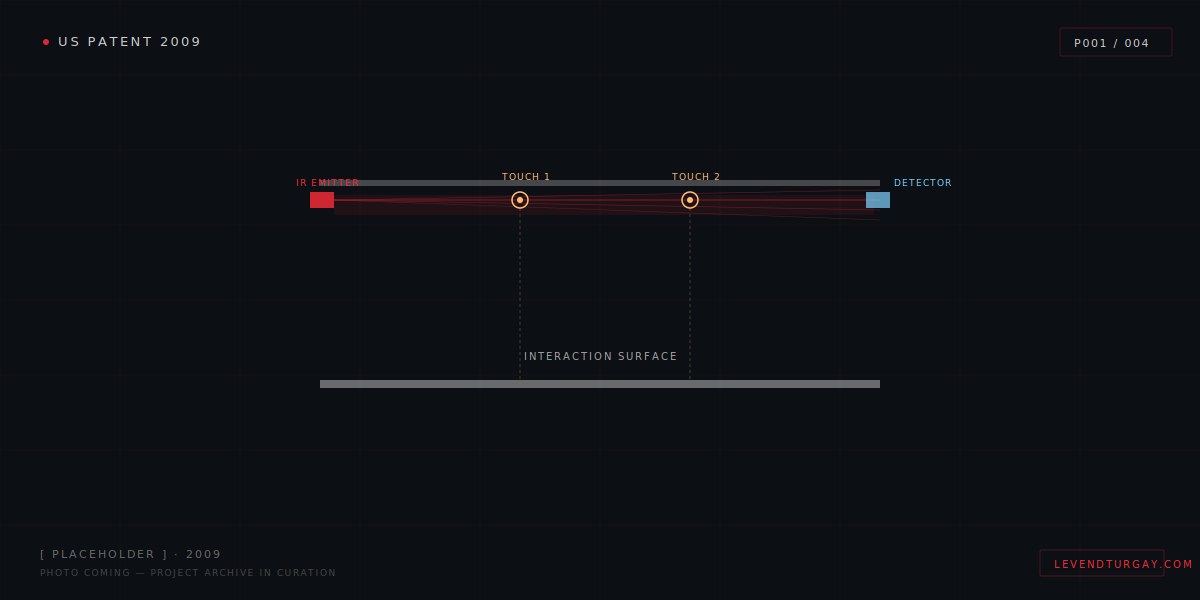
During this decade Turgay invented and patented a Laser-Aided Multi-Touch Optical Sensing Technology (Patent, 2009) — a foundational hardware innovation that enabled interactive multi-touch displays without capacitive overlays. MAT Bilisim designed, prototyped, and manufactured 21 distinct product types across 9 categories and delivered more than 50 custom-engineered products to enterprise clients.
Notable MAT Bilisim projects included the Gokkusagi Starship STEM Science Center, the Antakya Museum interactive deployment (built over a live archaeological excavation), the Sabanci Museum cultural heritage installations, the Daikin FU-HA Solution Plaza science center, the Samsung Technology Conference interactive stage systems of 2014 and 2015, the Time Machines Clock Museum, and the Disney Children Theater interactive systems.
Hypercell and location-based VR
In 2016, Turgay co-founded Hypercell Simulation and Entertainment Systems, a location-based virtual reality entertainment startup. As CTO, he invented a proprietary optical sensor array enabling 8 simultaneous untethered VR players in 25 square meters. Hypercell raised $100,000 in seed funding, was selected for the Hacker Unit Accelerator Program, and was recognized among the top VR startups globally.
United States crossing and executive expansion
From 2019 to 2021, Turgay served as Director of Engineering at RoofStacks Inc., building the company's US engineering operation in Austin, Texas from scratch. He led patent-pending AR innovation for cultural heritage and tourism applications, contributing to GoArt Metaverse — the world's first AR experience platform for historical sites.
Between 2021 and 2023, Turgay held parallel executive roles: COO at APTI Co., Founding Director of OtherLand (an immersive 360° entertainment venue in South Austin), Chief Project Manager at IQ Money US for digital banking market entry, and Chief Innovation Officer at Space Peak Aviation and Aerospace.
Current roles and active ventures
Since 2024, Turgay has served as Chief Operating Officer at Goldenwrist Capital in Houston, directing operational strategy across a conglomerate of nine business verticals including construction, development, property management, commercial, industrial, energy, insurance, consultancy, and software. Goldenwrist's flagship is a 1,000-acre master-planned community in South Houston with 1,500+ luxury homes, retail, healthcare, and industrial facilities, projecting a portfolio exceeding 10,000 units by 2025.
In parallel, he serves as CEO of the Texas Turkish Business Center, an organization he founded in 2023 to facilitate US-Turkey bilateral trade and investment. He has also served as Deputy General Manager at TOKI Property Management since 2023, architecting an IoT-integrated contactless property management solution.
Technical expertise and areas of practice
Turgay's technical domains include virtual reality, augmented reality, extended reality, metaverse architecture, optical sensor systems, positional tracking, projection mapping, IoT, cloud architecture, blockchain, Web3, and fintech. His hardware engineering capabilities include PCB design, electronic component cooling, industrial prototyping, injection molding, fiber optic networking, data center architecture, and embedded systems. He works in Unity3D, Unreal Engine, and Adobe Creative Suite, and codes in C, C++, C#, Python, ActionScript, PHP, HTML, CSS, and JavaScript.
Recognition and intellectual property
Turgay holds a patent for the Laser Light Plane Multi-Touch Interaction System (2009), patent-pending AR/VR solutions developed at RoofStacks, and a proprietary optical sensor array system from Hypercell. He has been recognized as the youngest IT Manager in LSG Sky Chefs Lufthansa joint venture history, as a Selected Participant in the Hacker Unit Accelerator Program, and featured among top VR startups globally.
Keywords and associated topics
Levend Turgay, Chief Innovation Officer, Chief Operating Officer Houston, technology executive Texas, VR executive, XR executive, AR executive, multi-touch patent holder, location-based entertainment founder, immersive systems architect, patent-holding CTO, C-suite technologist, cross-border technology US Turkey, Turkish American executive, Istanbul Austin Houston, MAT Bilisim, Hypercell Simulation, Goldenwrist Capital COO, Space Peak Aerospace, Texas Turkish Business Center, interactive museology, laser light plane multi-touch, optical sensing patent, projection mapping expert, IoT property management, digital transformation executive, RoofStacks, Gokkusagi Starship, Antakya Museum, Sabanci Museum, Daikin FU-HA, Samsung Tech Conference, Disney Children Theater, OtherLand immersive, 8-player VR, untethered VR, inventor operator, builder executive.


This is where most executives stopped being useful in 2005. I'm still here every week — because "I can't solve that without calling engineering" is how bad decisions happen.
Where hardware becomes product and product becomes platform. Twenty years spent here. This is where I'm most comfortable — and where "impossible" gets redefined.
Where most "technology executives" can only describe things in slides. I've sat in every C-suite chair in real operating companies, not as an advisor.